
Cris Bledsoe says that on January 8, 2007, while at the Cape Fear River in North Carolina, he encountered enormous luminous objects. He reports approximately four hours of missing time, followed by continuing encounters with glowing orbs and other beings.
He eventually encountered what he calls “the Lady”—a luminous female figure whom he says communicated with him. Interestingly, Bledsoe himself has increasingly rejected the simple explanation that these are extraterrestrial aliens. In a recent interview he explicitly said, “They’re not aliens, these were angels.”
That’s a very important distinction.
2. But here’s the biblical problem
We should not automatically conclude that a beautiful, luminous being is an angel of God.
Paul gives us a very serious warning:
2 Corinthians 11:14 (NASB)
“No wonder, for even Satan disguises himself as an angel of light.”
And John says:
1 John 4:1 (NASB)
“Beloved, do not believe every spirit, but test the spirits to see whether they are from God…”
So the biblical question isn’t:
“Was the experience supernatural?”
It may have been.
The question is:
“What was the source of the supernatural experience?”
That’s a completely different question.
3. The “orbs” and the Bible
Bledsoe himself has compared his fiery objects with biblical phenomena such as the fiery chariots associated with Elijah.
There really are biblical examples of unusual manifestations of light and fire:
2 Kings 2:11 (NASB)
“As they were going along and talking, behold, there appeared a chariot of fire and horses of fire which separated the two of them. And Elijah went up by a whirlwind to heaven.”
Also:
Ezekiel 1:4 (NASB) describes
“a storm wind … a great cloud with fire flashing forth continually…”
And the angelic realm is repeatedly associated with extraordinary manifestations.
But here’s the caution:
The Bible never teaches us to identify every unexplained light in the sky as an angel.
That’s an assumption we must avoid.
4. The “Lady” is where I become much more cautious
According to Bledsoe’s account, the Lady communicated messages concerning love, humanity’s future, spiritual awakening, and the continuing phenomenon. His own account describes her as being connected with the orbs and the beings.
From a Christian perspective, I would not accept her identity simply because she appeared beautiful, peaceful, or loving.
Why?
Because Scripture says supernatural beings can deceive.
Galatians 1:8 (NASB)
“But even if we, or an angel from heaven, should preach to you a gospel contrary to what we have preached to you, he is to be accursed!”
Notice that carefully:
“an angel from heaven.”
The test isn’t how impressive the messenger is.
The test is whether the message agrees with the Gospel of Jesus Christ.
5. This gives us a biblical “test”
If someone encounters a supernatural being, we can put the experience through several biblical tests:
TEST #1 — What does it say about Jesus?
1 John 4:2 (NASB)
“By this you know the Spirit of God: every spirit that confesses that Jesus Christ has come in the flesh is from God.”
Jesus Christ is the dividing line.
TEST #2 — Does it agree with Scripture?
Isaiah 8:20 (NASB)
“To the law and to the testimony! If they do not speak according to this word, it is because they have no dawn.”
Scripture doesn’t tell us to modify biblical revelation because of a supernatural experience.
Rather, the experience is tested by Scripture.
TEST #3 — Does it glorify Christ?
Jesus said:
John 16:13–14 (NASB)
“He will guide you into all the truth… He will glorify Me…”
The Holy Spirit’s ministry ultimately points to Christ, not toward fascination with supernatural phenomena.
TEST #4 — What fruit does it produce?
Jesus said:
Matthew 7:20 (NASB)
“So then, you will know them by their fruits.”
6. And here’s the fascinating connection to “aliens”
There are really three possible categories people use when discussing these experiences:
1. Extraterrestrial beings
Beings physically originating somewhere else in the universe.
2. Interdimensional/non-human intelligence
A modern category used when people believe the phenomenon isn’t simply physical extraterrestrials.
3. Spiritual beings
The biblical category: angels, demons, principalities, powers, etc.
The Bible clearly teaches category #3 exists.
Ephesians 6:12 (NASB):
“For our struggle is not against flesh and blood, but against the rulers, against the powers, against the world forces of this darkness, against the spiritual forces of wickedness in the heavenly places.”
What Scripture doesn’t tell us is that modern UFO sightings are automatically those beings.
So I would resist both extremes:
“They’re definitely aliens.” ❌
and
“They’re definitely angels.” ❌
The biblical position is:
“Test the spirits.” ✅
7. One thing about Bledsoe’s story particularly catches my attention
Bledsoe says that the phenomenon is benevolent and that the Lady communicated a message of love and spiritual transformation.
But Christianity cannot ultimately define “good” merely as:
It felt loving.
The biblical standard is:
Does it lead people to the true God revealed in Jesus Christ and agree with His Word?
That distinction is enormous.
And there is one more fascinating biblical passage
Paul speaks about “the prince of the power of the air” in Ephesians 2:2.
That doesn’t mean UFOs are demons. Scripture doesn’t say that.
But Scripture does establish something important: there is an unseen spiritual realm operating alongside the visible physical world.
And that’s why I think the Christian conversation about UFOs needs to be much more careful than simply saying:
“Little green men from another planet.”
The Bible gives us a much bigger supernatural framework.
Absolutely. Let’s go deeper, but let’s keep Scripture as the measuring rod, rather than trying to make the Bible say something it does not say.
UFOs, Angels, Genesis 6, and the Nephilim
1. The Bible clearly teaches that there is an unseen realm
The starting point is not UFOs. It is the biblical reality of spiritual beings.
Ephesians 6:12 — NASB
“For our struggle is not against flesh and blood, but against the rulers, against the powers, against the world forces of this darkness, against the spiritual forces of wickedness in the heavenly places.”
Paul assumes that the invisible spiritual realm is real.
And Scripture tells us that God created both the visible and invisible realms:
Colossians 1:16 — NASB
“For by Him all things were created, both in the heavens and on earth, visible and invisible…”
2. What about Genesis 6 and the “sons of God”?
This is one of the most intriguing passages.
Genesis 6:1–2 — NASB
“Now it came about, when men began to multiply on the face of the land, and daughters were born to them, that the sons of God saw that the daughters of men were beautiful; and they took wives for themselves, whomever they chose.”
Then:
Genesis 6:4 — NASB
“The Nephilim were on the earth in those days, and also afterward, when the sons of God came in to the daughters of men…”
There are different interpretations of “sons of God.”
One interpretation understands them as fallen angelic beings.
Another understands them as a human lineage—often identified with the godly line of Seth.
Another interpretation understands the passage in terms of powerful human rulers.
But here’s an important point:
The text itself does not say “aliens.”
So we shouldn’t take Genesis 6 and turn it into:
“The Bible says extraterrestrials came to earth.”
It doesn’t.
If the “sons of God” are understood as angelic beings, then the passage concerns the spiritual realm, not extraterrestrial life.
3. Jude gives us something very important
Jude refers to angels who sinned:
Jude 6 — NASB
“And angels who did not keep their own domain, but abandoned their proper dwelling place, He has kept in eternal bonds under darkness for the judgment of the great day.”
That is remarkable.
The Bible teaches that some angels rebelled against God.
And Scripture repeatedly distinguishes between faithful angels and rebellious spiritual powers.
That gives us a biblical category for supernatural beings who are not necessarily good simply because they are supernatural.
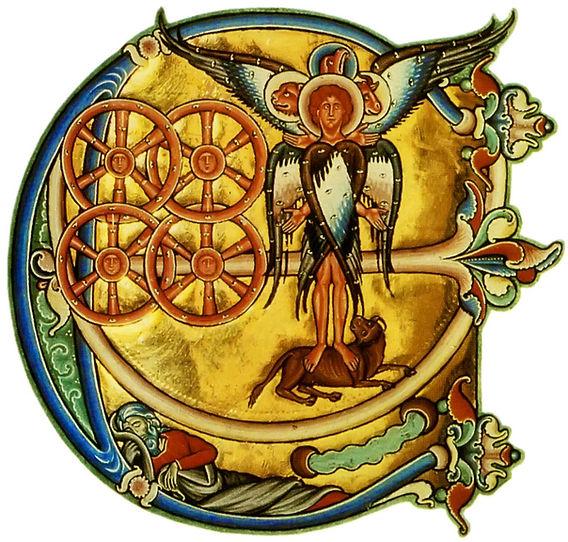
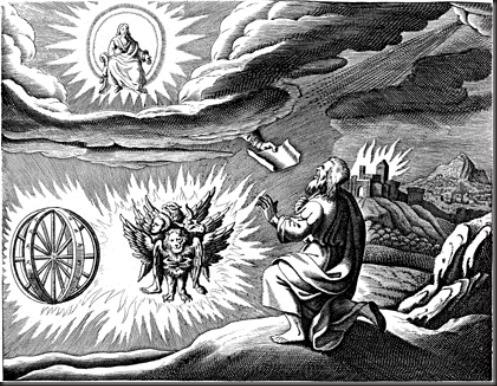
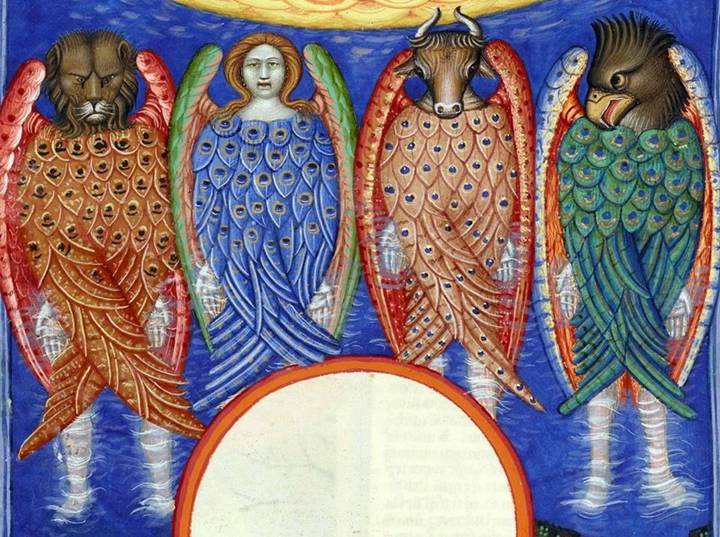
4. Then we come to Ezekiel
This is probably one of the passages most frequently connected to UFO discussions.
4
Ezekiel sees something extraordinary:
Ezekiel 1:15–16 — NASB
“Now as I looked at the living creatures, behold, there was one wheel on the earth beside the living creatures, for each of the four of them. The appearance of the wheels and their workmanship was like sparkling beryl, and all four of them had the same form, their appearance and workmanship being as if one wheel were within another.”
That sounds extremely strange to modern ears.
But we have to notice something crucial:
Ezekiel tells us what he is seeing.
It is a vision.
And ultimately he sees the glory of Yahweh.
The passage isn’t teaching Ezekiel about spacecraft.
It is revealing God’s glory and heavenly throne.
5. What about Elijah’s “chariot of fire”?
This is another passage people frequently connect with UFOs.
2 Kings 2:11 — NASB
“As they were going along and talking, behold, there appeared a chariot of fire and horses of fire which separated the two of them. And Elijah went up by a whirlwind to heaven.”
Notice the language:
fire
chariot
horses
heaven
whirlwind
That’s unquestionably supernatural.
But again, Scripture interprets the event for us.
It wasn’t an extraterrestrial visitation.
It was God’s supernatural transportation of Elijah.
6. What about “the heavens”?
Here’s where things become even more interesting.
The Bible uses “heavens” in several different ways.
There is the atmospheric heavens.
There are the celestial heavens—the sun, moon and stars.
And Scripture speaks of a spiritual heavenly realm.
Paul says:
2 Corinthians 12:2 — NASB
“I know a man in Christ, who fourteen years ago—whether in the body I do not know, or out of the body I do not know, God knows—such a man was caught up to the third heaven.”
Paul therefore uses the expression “third heaven.”
This demonstrates that biblical cosmology recognizes dimensions of reality beyond ordinary human experience.
But again, that doesn’t mean “third heaven = outer space” or “third heaven = another planet.”
7. Now bring Chris Bledsoe into the picture
This is where I think Bledsoe’s story becomes particularly interesting.
He initially interpreted his experiences through a UFO/alien framework.
But eventually he began interpreting the phenomenon as angelic/spiritual.
That’s actually much closer to the biblical question than simply asking:
“Which planet did they come from?”
But Christianity has another question:
Who is Jesus Christ in relation to all of this?
Because Scripture says:
Colossians 1:16–17 — NASB
“For by Him all things were created, both in the heavens and on earth, visible and invisible… All things have been created through Him and for Him. He is before all things, and in Him all things hold together.”
That puts everything—visible and invisible—under the authority of Christ.
8. And this is where discernment becomes essential
Suppose someone sees a luminous being.
Suppose it speaks.
Suppose it performs supernatural things.
Suppose it says:
“I am here to help humanity.”
The Bible says:
Don’t automatically believe it.
1 John 4:1 — NASB
“Beloved, do not believe every spirit, but test the spirits to see whether they are from God…”
And Paul’s warning is even stronger:
2 Corinthians 11:14 — NASB
“No wonder, for even Satan disguises himself as an angel of light.”
So even an apparently beautiful heavenly messenger must be tested.
9. The ultimate test is Jesus
This is where I would place the dividing line.
The Holy Spirit glorifies Jesus.
John 16:14 — NASB
“He will glorify Me, for He will take from Mine and will disclose it to you.”
Therefore, if a supposed supernatural revelation:
- diminishes Jesus,
- denies His incarnation,
- denies His death and resurrection,
- replaces Scripture,
- introduces another gospel,
- encourages worship of another being,
then Christians have biblical grounds to reject it.
Paul gives us the strongest possible warning:
Galatians 1:8 — NASB
“But even if we, or an angel from heaven, should preach to you a gospel contrary to what we have preached to you, he is to be accursed!”
Notice:
“even if… an angel from heaven.”
The supernatural appearance doesn’t authenticate the message.
The Gospel authenticates the message.
10. So, are UFOs demons?
I would not say that Scripture gives us enough information to make that declaration.
Could some supernatural phenomena theoretically involve spiritual beings?
Yes—the Bible clearly teaches that spiritual beings exist.
Could every UFO be explained that way?
No.
Could some UFO reports simply involve aircraft, satellites, atmospheric phenomena, optical effects, misidentification, or unexplained physical phenomena?
Absolutely.
Could there be something genuinely unexplained in some cases?
Certainly.
But “unexplained” doesn’t automatically mean “demonic,” “angelic,” or “extraterrestrial.”
The biblical framework
I’d summarize the whole subject this way:
VISIBLE REALM
↓
Creation — earth, planets, stars, physical beings
INVISIBLE REALM
↓
Angels — Hebrews 1:14
Fallen angels — Jude 6
Spiritual powers — Ephesians 6:12
Satan — 2 Corinthians 11:14
ABOVE BOTH REALMS
JESUS CHRIST
Colossians 1:16
“All things have been created through Him and for Him.”
And that gives us the proper perspective.
We don’t have to be afraid of UFOs, and we don’t need to become fascinated with them.
We need to be fascinated with Jesus.
“Test the spirits.” — 1 John 4:1
And the final question isn’t:
“Are they aliens?”
1. “Firmament” — רָקִיעַ (raqia)
The word raqia comes from the Hebrew root raqa, carrying the idea of something spread out, extended, or stretched out.
Genesis says:
Genesis 1:6–8 — NASB
“Then God said, ‘Let there be an expanse in the midst of the waters, and let it separate the waters from the waters.’ God made the expanse, and separated the waters which were below the expanse from the waters which were above the expanse. God called the expanse heaven.”
The NASB translates raqia as “expanse.”
Older English translations often use “firmament.”
What does this tell us?
It tells us that the biblical writers understood the created heavens as an expanse stretched out by God. It does not, by itself, teach that there is a solid dome preventing spacecraft from leaving earth.
Isaiah uses similar imagery:
Isaiah 40:22 — NASB
“It is He who sits above the circle of the earth, And its inhabitants are like grasshoppers, Who stretches out the heavens like a curtain And spreads them out like a tent to dwell in.”
The emphasis is God’s creative sovereignty, not a technical description of astrophysics.
2. “The heavens”
The Hebrew word is שָׁמַיִם (shamayim).
It is plural in form and is generally translated “heavens” or “sky.”
Genesis 1:1 says:
“In the beginning God created the heavens and the earth.”
The word can encompass the sky, celestial heavens, and the broader realm above the earth, depending upon context.
But Scripture also distinguishes the physical heavens from the spiritual heavenly realm.
Paul says:
2 Corinthians 12:2 — NASB
“I know a man in Christ, who fourteen years ago—whether in the body I do not know, or out of the body I do not know, God knows—such a man was caught up to the third heaven.”
This is where we have to be careful.
The Bible speaks about heavenly realms, but it does not give us a modern scientific map of dimensions.
3. “Sons of God” — בְּנֵי־הָאֱלֹהִים (bene ha’elohim)
Now we’re getting into one of the most fascinating passages.
Genesis 6:2 — NASB
“that the sons of God saw the daughters of men were beautiful; and they took wives for themselves, whomever they chose.”
The Hebrew expression literally means approximately:
“sons of God.”
And it appears elsewhere in Scripture.
For example:
Job 1:6 — NASB
“Now there was a day when the sons of God came to present themselves before Yahweh…”
Here the context clearly places the sons of God in the heavenly court.
Job 38:7 likewise speaks of:
“the sons of God”
shouting for joy when God created the earth.
That strongly supports an angelic/heavenly interpretation in Job.
However, Genesis 6 is debated. Faithful biblical scholars have understood the passage differently.
The three major interpretations are:
- Angelic beings who rebelled.
- The godly human line of Seth intermarrying with the ungodly.
- Powerful human rulers who took women according to their own desires.
The first interpretation has a very long history and fits particularly well with Jude 6 and 2 Peter 2:4.
But we should not turn that interpretation into:
“Genesis says extraterrestrials bred with humans.”
It doesn’t say that.
4. Now the big one — Elohim
אֱלֹהִים — Elohim
This word is extremely important.
It’s often translated:
God
But grammatically, Elohim has a plural form.
That sometimes leads people to claim:
“The Hebrew Bible says there were multiple gods.”
That’s too simplistic.
When Elohim refers to the God of Israel, it normally takes singular grammatical verbs and adjectives.
For example:
Genesis 1:1
“In the beginning God (Elohim) created…”
The verb created is singular.
So Genesis isn’t teaching polytheism.
But elohim can refer to heavenly beings
This is where the Hebrew becomes fascinating.
The word elohim can function as a broader term referring to deity or beings belonging to the supernatural/heavenly realm, depending upon context.
Psalm 82 is an important example.
Psalm 82:1 — NASB
“God takes His stand in His own congregation; He judges in the midst of the rulers.”
The Hebrew contains Elohim in the opening:
Elohim stands in the assembly of El.
Then verse 6 says:
Psalm 82:6 — NASB
“I said, ‘You are gods, And all of you are sons of the Most High.’”
Jesus actually quotes this passage in John 10:34.
5. Does Elohim mean aliens?
No.
This is where some modern UFO interpretations go off the rails.
Some argue:
Elohim = extraterrestrial beings.
But there is no linguistic basis for equating the Hebrew word Elohim with extraterrestrials.
The biblical category is fundamentally the divine/heavenly realm, not beings from another planet.
6. But here’s where it connects to our UFO discussion
The Bible gives us something modern culture often doesn’t:
A category for supernatural intelligence that isn’t human.
Paul says:
Colossians 1:16 — NASB
“For by Him all things were created, both in the heavens and on earth, visible and invisible…”
Notice the two categories:
VISIBLE
and
INVISIBLE
And both were created through Christ.
That means biblical Christianity doesn’t require us to say:
“If something intelligent exists that isn’t human, it must be an extraterrestrial.”
The Bible already has a much larger supernatural framework.
7. And this brings us back to Chris Bledsoe and Steven Greer
This is where I would make a very important distinction.
Chris Bledsoe has interpreted his experiences increasingly in terms of angels/spiritual beings.
Steven Greer, on the other hand, has developed a worldview centered heavily around extraterrestrial intelligence, consciousness, meditation, and a universal spiritual reality.
Those are not the same theological framework.
And neither man’s personal interpretation establishes what the phenomenon actually is.
Scripture gives us the test:
1 John 4:1 — NASB
“Beloved, do not believe every spirit, but test the spirits to see whether they are from God…”
And then Scripture gives us the ultimate center of discernment:
Jesus Christ.
Colossians 1:16–17 — NASB
“All things have been created through Him and for Him. He is before all things, and in Him all things hold together.”
So whether we’re talking about angels, demons, visions, UFOs, unexplained phenomena, or alleged extraterrestrial beings, our foundation remains the same:
Christ is Lord over the visible and invisible creation.
Top of Form
Bottom of Form

