17 The LORD said to Moses, “I will also do this thing of which you have spoken; for you have found favor in My sight and I have known you by name.” 18 Then Moses said, “I pray You, show me Your glory!” 19 And He said, “I Myself will make all My goodness pass before you, and will proclaim the name of the LORD before you; and I will be gracious to whom I will be gracious, and will show compassion on whom I will show compassion.” 20 But He said, “You cannot see My face, for no man can see Me and live!” 21 Then the LORD said, “Behold, there is a place by Me, and you shall stand there on the rock; 22 and it will come about, while My glory is passing by, that I will put you in the cleft of the rock and cover you with My hand until I have passed by. 23 Then I will take My hand away and you shall see My back, but My face shall not be seen.” Exodus 33:17-23
The LORD descended in the cloud and stood there with him as he called upon the name of the LORD. 6 Then the LORD passed by in front of him and proclaimed, “The LORD, the LORD God, compassionate and gracious, slow to anger, and abounding in lovingkindness and truth; 7 who keeps lovingkindness for thousands, who forgives iniquity, transgression and sin; yet He will by no means leave the guilty unpunished, visiting the iniquity of fathers on the children and on the grandchildren to the third and fourth generations.” 8 Moses made haste to bow low toward the earth and worship. 9 He said, “If now I have found favor in Your sight, O Lord, I pray, let the Lord go along in our midst, even though the people are so obstinate, and pardon our iniquity and our sin, and take us as Your own possession.” Exodus 34:5-9
Jesus taught that faith the size of a mustard seed could move a mountain. The message is simple: God is not asking us to trust in our own ability, but to put our faith in Him and His Word.
Point 1 — Faith Does Not Have to Be Big to Be Real
Scripture: Matthew 17:20
Jesus compared faith to a mustard seed, a very small seed.
Don’t despise the beginning of your faith.
Don’t measure faith by your feelings.
Put your confidence in the greatness of God.
Teaching point: The power of faith is not found in human confidence alone, but in the God in whom we place our confidence.
Say this to your audience: “You may feel like your faith is small today, but don’t give up! Put that faith in a great God.”
Point 2 — Faith Comes by Hearing God’s Word
Scripture: Romans 10:17
“So faith comes from hearing, and hearing by the word of Christ.”
Faith is nourished by the Word of God.
We cannot build strong confidence in God’s promises while continually feeding on fear and unbelief.
Spend time hearing, reading, meditating on, and obeying Scripture.
Teaching point: If you want your faith strengthened, give God’s Word a place in your heart every day.
Say this: “Feed your faith on the Word of God, not on the fears of this world!”
Point 3 — Faith Must Be Put into Action
Scripture: James 2:17
James teaches that faith without works is dead.
Faith believes what God has said.
Faith responds in obedience.
Faith acts on God’s Word even when circumstances have not yet changed.
Abraham demonstrated faith by obeying God (Hebrews 11:8).
Teaching point: Biblical faith is more than agreeing with Scripture intellectually. It means trusting God enough to respond to His Word.
Say this: “Don’t just talk about believing God. Let your decisions and obedience demonstrate your faith!”
Point 4 — Faith Speaks in Agreement with God’s Word
Scripture: Mark 11:22–24
Jesus told His disciples to have faith in God and taught them about believing prayer.
Speak in agreement with God’s revealed truth.
Refuse to let fear have the final word in your heart.
Pray with confidence while remaining submitted to God’s will.
This is not a formula in which words automatically produce whatever we desire. Our confidence rests in God, not in the power of human speech.
Teaching point: Faith does not deny the existence of a mountain; faith refuses to treat the mountain as greater than God.
Say this: “My circumstances may be real, but my God is greater than my circumstances!”
Point 5 — Our Faith Rests on the Finished Work of Jesus
Scripture: 2 Corinthians 1:20
“For as many as the promises of God are, in Him they are yes; therefore through Him also is our Amen to the glory of God through us.”
Under the New Covenant:
Through Jesus, we have access to the Father (Hebrews 4:16).
We stand in God’s grace through faith (Romans 5:1–2).
We resist the devil as we submit to God (James 4:7).
We trust God’s promises because of His faithfulness.
Teaching point: We do not use faith to earn what Jesus accomplished. We trust God and respond to what He has provided through Christ.
Say this: “My faith is not in my ability to make something happen. My faith is in Jesus Christ, who is faithful to His Word!”
Closing: Three declarations of faith
I will believe God’s Word.
Romans 10:17
I will act upon what God has spoken.
James 2:17
I will trust God regardless of what I see.
2 Corinthians 5:7
Closing prayer
Father, in the name of Jesus, thank You for Your Word. Help us to trust You with genuine faith, even when our faith feels small. Strengthen our hearts through Your Word. Teach us to walk in obedience, pray with confidence, and stand firm in the finished work of Jesus Christ. We refuse to be ruled by fear, and we choose to trust Your faithfulness. In Jesus’ name, amen.
Hermeticism is an esoteric philosophical and religious tradition associated with Hermes Trismegistus. The familiar list of seven principles comes from The Kybalion (1908), rather than being a seven-part list found in the ancient Hermetic writings themselves.
A foundational distinction guides our examination:
The Bible teaches that God created and governs the universe. Hermetic philosophy often seeks principles by which the universe and spiritual reality supposedly operate. Those are not necessarily the same worldview, even when some of the language sounds similar.
Our standard is Isaiah 8:20 (NASB):
“To the law and to the testimony! If they do not speak according to this word, it is because they have no dawn.”
Let’s examine each principle, including what may sound similar to Scripture, what differs, and where the underlying teaching conflicts with biblical revelation.
1. The Law of Mentalism
Hermetic teaching
“The All is Mind; the Universe is Mental.”
This principle presents Mind as the ultimate foundation of reality. In some interpretations, the universe exists within a universal mind.
What sounds similar to Scripture?
The Bible teaches that God is Spirit, that He possesses perfect wisdom, and that creation originated in His will and purpose.
Genesis 1:1 (NASB)
“In the beginning God created the heavens and the earth.”
Hebrews 11:3 (NASB)
“By faith we understand that the worlds were prepared by the word of God, so that what is seen was not made out of things which are visible.”
Where the difference lies
The Bible does not teach that the universe is God’s mind or that human consciousness creates reality. It distinguishes the Creator from His creation.
God created the universe; the universe is not simply an expression of an impersonal cosmic Mind.
Where the conflict arises: If Mentalism teaches that the universe is divine Mind and that human thought can manipulate reality through a universal mental law, it goes beyond—and can contradict—the biblical teaching that God alone is the sovereign Creator.
Biblical conclusion: Our thoughts matter, but they do not make us sovereign creators. Faith trusts the God who created all things.
2. The Law of Correspondence
Hermetic teaching
“As above, so below; as below, so above.”
This principle suggests that patterns on one level of reality reflect patterns on another—cosmic, earthly, mental, or spiritual.
What sounds similar to Scripture?
Scripture teaches that creation reveals something about its Creator.
Romans 1:20 (NASB)
“For since the creation of the world His invisible attributes, that is, His eternal power and divine nature, have been clearly perceived, being understood by what has been made, so that they are without excuse.”
The Bible also uses earthly illustrations to teach spiritual truths, such as Jesus’ parables about seeds, soil, harvests, and vineyards.
Where the difference lies
The Bible does not teach that every pattern in the heavens is mirrored on earth or that discovering hidden correspondences gives us spiritual mastery.
Romans 1 says creation reveals God’s attributes. It does not say that the universe and humanity operate according to identical occult laws.
Where the conflict arises: When Correspondence becomes a method of divination, astrology, or discovering hidden spiritual powers through cosmic patterns, it moves into practices Scripture warns against (Deuteronomy 18:10–12).
Biblical conclusion: We may learn about God through His creation, but we should interpret creation through God’s revealed Word rather than use it to construct a hidden spiritual system.
The principle extends the language of vibration beyond physical motion to thoughts, emotions, and spiritual states. Some modern teachings claim that raising your vibration attracts desired circumstances.
What sounds similar to Scripture?
The Bible describes a living creation that changes, moves, and responds to God’s power.
Hebrews 1:3 (NASB) says that Christ:
“upholds all things by the word of His power.”
Scripture also speaks about the influence of our words, attitudes, and conduct.
Proverbs 18:21 (NASB)
“Death and life are in the power of the tongue, And those who love it will eat its fruit.”
Where the difference lies
In physics, vibration is a measurable form of oscillatory motion. It does not follow that every thought or emotion has a spiritual frequency that attracts corresponding events. That is a metaphysical claim, not an established scientific law.
Biblical faith is not a technique for changing frequencies. It is trust in the living God.
Where the conflict arises: If a teaching says you can manifest healing, wealth, or protection by raising your frequency, it risks replacing prayer, faith, wisdom, and God’s sovereignty with an impersonal spiritual mechanism. It can also wrongly make suffering people believe they attracted their own illness or hardship through low vibrations.
Biblical conclusion: Renew your mind, speak truth, and walk in faith—but do not confuse those biblical practices with a universal vibration law.
Romans 12:2 (NASB)
“And do not be conformed to this world, but be transformed by the renewing of your mind, so that you may prove what the will of God is, that which is good and acceptable and perfect.”
4. The Law of Polarity
Hermetic teaching
“Everything is Dual; everything has poles.”
This principle views opposites such as hot and cold or love and hate as different degrees on a common scale.
What sounds similar to Scripture?
The Bible frequently contrasts two paths: wisdom and folly, righteousness and wickedness, light and darkness.
John 8:12 (NASB)
“Then Jesus again spoke to them, saying, ‘I am the Light of the world; the one who follows Me will not walk in the darkness, but will have the Light of life.’”
Where the difference lies
Hermetic Polarity tends to treat opposites as degrees of the same underlying reality. Scripture does not treat every moral or spiritual opposition that way.
Good and evil are not simply opposite settings on one neutral spiritual dial. God’s holiness is not a higher degree of evil, and truth is not merely a different degree of falsehood.
Where the conflict arises: If Polarity is used to claim that good and evil are ultimately interchangeable, or that spiritual darkness is simply another expression of the same divine reality as holiness, it conflicts with biblical moral distinctions.
Biblical conclusion: Emotions may change in degree, and courage may overcome fear. But we must not reduce the distinction between righteousness and sin to a neutral polarity.
Isaiah 5:20 (NASB)
“Woe to those who call evil good, and good evil; Who substitute darkness for light and light for darkness; Who substitute bitter for sweet and sweet for bitter!”
5. The Law of Rhythm
Hermetic teaching
“Everything flows, out and in; everything has its tides.”
Rhythm describes recurring cycles, rises and falls, and movements between opposing conditions.
What sounds similar to Scripture?
The Bible plainly recognizes seasons and recurring patterns in life.
Ecclesiastes 3:1 (NASB)
“There is an appointed time for everything. And there is a time for every matter under heaven.”
We experience seasons of joy and sorrow, work and rest, planting and harvest.
Where the difference lies
The Bible’s teaching about seasons does not establish a universal pendulum law governing every spiritual experience. Nor does it promise that every low season will automatically be balanced by an equal high season.
Some suffering lasts a long time. Some believers endure persecution and hardship without receiving an immediate earthly reversal.
Where the conflict arises: If Rhythm teaches that negative circumstances must inevitably swing back into positive ones through a cosmic law, it can give false assurance. Our hope rests in God’s faithfulness, not in a supposed universal balancing mechanism.
Biblical conclusion: Recognize life’s seasons, remain faithful through hardship, and trust Yahweh without presuming that circumstances must automatically reverse.
6. The Law of Cause and Effect
Hermetic teaching
“Every cause has its effect; every effect has its cause.”
This principle holds that events arise from causes, even when the causes are not understood.
What sounds similar to Scripture?
This is one of the clearest parallels with biblical teaching.
Galatians 6:7 (NASB)
“Do not be deceived, God is not mocked; for whatever a person sows, this he will also reap.”
Scripture teaches that choices have consequences. Actions can produce results, and God holds people morally accountable.
Where the difference lies
The Bible does not teach that every event can be explained by a discoverable, impersonal cosmic mechanism. God is personal and sovereign, and Scripture acknowledges human limitations in understanding why particular things happen.
Consider Job. His suffering was not proof that he had committed some hidden sin that caused his calamities.
Jesus also rejected the assumption that a man’s blindness was necessarily caused by his own sin or his parents’ sin (John 9:1–3).
Where the conflict arises: If Cause and Effect becomes the claim that every illness, financial loss, or tragedy was attracted by a person’s thoughts, spiritual condition, or failure to apply a law correctly, it conflicts with the Bible’s treatment of suffering.
It can also turn faith into a technique: do the correct spiritual steps and you must obtain the desired outcome.
Biblical conclusion: Sow wisely, act responsibly, and expect consequences—but do not assume you can explain every person’s suffering or control every outcome through spiritual techniques.
7. The Law of Gender
Hermetic teaching
“Gender is in everything; everything has its Masculine and Feminine Principles.”
In The Kybalion, this extends beyond biological sex to supposed masculine and feminine forces operating in mental and spiritual creation.
What sounds similar to Scripture?
The Bible teaches that God created humanity male and female and that creation involves reproduction and fruitfulness.
Genesis 1:27 (NASB)
“God created man in His own image, in the image of God He created him; male and female He created them.”
Scripture also uses the imagery of planting, conception, birth, and fruitfulness to describe spiritual realities.
Where the difference lies
The Bible does not teach that every object, thought, or spiritual reality contains a masculine and feminine cosmic force. Nor does it teach that God must operate through complementary gender principles to create.
The Lord is the Creator, not a being dependent upon an occult system of generative forces.
Where the conflict arises: When Gender becomes a universal spiritual mechanism, or when it assigns supposed occult masculine and feminine energies to every aspect of reality, it adds a doctrine that Scripture does not establish.
This does not mean that every discussion of masculine and feminine symbolism is automatically occult. The issue is whether the symbolism is being elevated into a spiritual law that governs God and creation.
Biblical conclusion: Honor God’s design for humanity and recognize the creative processes He established, without adopting an unbiblical universal gender principle.
Summary: Comparing the Seven Principles
Hermetic principle
Biblical parallel
Main concern
1. Mentalism
God creates through His Word
Equating the universe with Mind or making human thought sovereign
2. Correspondence
Creation reveals God’s attributes
Using cosmic patterns for divination or hidden spiritual knowledge
3. Vibration
Renewal of the mind; power of words
Treating manifestation through frequencies as a spiritual law
4. Polarity
Contrasts between light and darkness
Treating good and evil as interchangeable degrees
5. Rhythm
Seasons and appointed times
Assuming an automatic cosmic balance
6. Cause and Effect
Sowing and reaping
Blaming victims or claiming every outcome can be controlled
7. Gender
Creation of male and female
Making masculine and feminine forces universal spiritual laws
Three Scriptures for Testing These Teachings
These passages provide a sound biblical foundation for discernment.
1. Colossians 2:8 (NASB)
“See to it that no one takes you captive through philosophy and empty deception, according to the tradition of men, according to the elementary principles of the world, rather than according to Christ.”
Paul’s warning is not that every philosophical question is forbidden. It is that human systems must not displace Christ as the foundation of truth.
2. 1 John 4:1 (NASB)
“Beloved, do not believe every spirit, but test the spirits to see whether they are from God, because many false prophets have gone out into the world.”
Spiritual-sounding language should not be accepted merely because it sounds profound or promises hidden knowledge.
3. John 14:6 (NASB)
“Jesus said to him, ‘I am the way, and the truth, and the life; no one comes to the Father except through Me.’”
Christian faith is centered on a Person, Jesus Christ—not mastery of a collection of secret laws.
My overall conclusion
Richard, the important distinction is between recognizing a truth that Scripture also teaches and accepting an entire philosophical system because some of its statements sound biblical.
For example:
Sowing and reaping is biblical; an impersonal cosmic law that explains every tragedy is not.
Renewing your mind is biblical; believing your thoughts control the universe is not.
Recognizing seasons is biblical; believing the universe guarantees a balancing swing is not.
Learning from creation is biblical; seeking hidden spiritual knowledge through divination is not.
We should not reject a statement simply because a non-Christian philosopher expressed it. Instead, we should test its meaning, foundation, and implications against Scripture.
The central question is this: Does the teaching direct us to trust Yahweh and follow Jesus Christ, or does it promise spiritual power through knowledge and manipulation of supposedly hidden laws?
That distinction matters far more than the terminology.
For further study, the historical source of the sevenfold list is The Kybalion, published in 1908. Its seven principles are commonly presented as ancient Hermetic wisdom, but the exact seven-part system is not attested as such in the surviving ancient Hermetic texts.
ταράσσω — tarassō = to trouble, disturb, agitate, stir up, unsettle, throw into confusion.
It was used for something being stirred up or thrown into disorder.
Interestingly, the Greek is in the present passive imperative:
ταρασσέσθω — “let it not be troubled / disturbed.”
Jesus is speaking to the heart:
ἡ καρδία — hē kardia
In biblical Greek, kardia is more than our modern idea of emotions. It refers to the inner person—the center of thought, understanding, will, and affections.
So Jesus is essentially saying:
“Do not allow your inner person to become agitated, disturbed, or thrown into confusion.”
And notice something important:
Jesus doesn’t tell them, “There is nothing to be troubled about.”
He had just told them that He was going away and that Peter would deny Him (John 13).
Instead, He gives them the antidote to troubled hearts: faith.
2. “Believe in God”
πιστεύετε εἰς τὸν θεόν pisteuete eis ton Theon
πιστεύω — pisteuō = believe, trust, have faith in, rely upon.
But notice the preposition:
εἰς — eis
Literally, “into.”
So this is stronger than merely believing that God exists.
It carries the idea of placing one’s trust in God, directing one’s faith toward God.
You could paraphrase:
“Keep trusting God.”
3. “Believe also in Me”
πιστεύετε καὶ εἰς ἐμέ pisteuete kai eis eme
καὶ — kai = also, and
ἐμέ — eme = Me, emphatic form of “I.”
Jesus puts Himself alongside God as the object of the same faith:
“Believe in God; believe also in Me.”
That is an extraordinary statement.
Jesus isn’t merely saying:
“God can help you, and I can help you.”
He places faith in Himself alongside faith in God.
This fits immediately with what He says in verse 6:
“I am the way, and the truth, and the life; no one comes to the Father except through Me.” — John 14:6 NASB
The flow of Jesus’ thought
Troubled heart → Trust God → Trust Jesus → Peace
The issue isn’t that the disciples have no reason to feel pressure. They do.
The issue is where they place their trust when their circumstances are being shaken.
And there’s another beautiful connection.
Jesus doesn’t say:
“Don’t have a troubled heart because nothing bad will happen.”
He says:
“Believe.”
Faith doesn’t necessarily mean the absence of circumstances.
Faith means the heart has found its resting place in God and in Christ despite the circumstances.
ESV
“Let not your hearts be troubled. Believe in God; believe also in me.”
AMP
“Do not let your hearts be troubled [distressed, agitated]. You believe [confidently] in God; believe [confidently] also in Me.”
That word “agitated” in the AMP captures tarassō very well.
John 14:1 could therefore be expressed:
“Don’t allow your inner world to be shaken into confusion. Keep trusting Yahweh; keep trusting Me.”
And that leads directly into John 14:2–3: Jesus then tells them why they can trust Him—“I go to prepare a place for you… I will come again and receive you to Myself.”
3 “Behold, children are a gift of Yahweh, The fruit of the womb is a reward. 4 Like arrows in the hand of a warrior, So are the children of one’s youth. 5 How blessed is the man whose quiver is full of them; They will not be ashamed When they speak with their enemies in the gate.”
What does “heritage” mean?
The Hebrew word translated “gift” or “heritage” is נַחֲלָה (nachălāh)—an inheritance, possession, allotted portion, or heritage.
So the idea is stronger than merely saying children are something nice that God gives us. The psalm presents children as a portion entrusted by Yahweh—something received as a blessing and responsibility.
“Like arrows in the hand of a warrior”
This is particularly significant.
An arrow is:
Prepared — it must be shaped and equipped.
Directed — it needs guidance toward its intended target.
Released — eventually the child must step into his or her own life.
Capable of reaching farther than the one who shoots it.
The picture is therefore not simply having many children, but raising children who are prepared to fulfill their God-given purpose.
This connects beautifully with:
Proverbs 22:6 NASB
“Train up a child in the way he should go, Even when he grows older he will not abandon it.”
And Deuteronomy 6:6–7 NASB:
“These words, which I am commanding you today, shall be on your heart. You shall repeat them diligently to your sons and speak of them when you sit in your house and when you walk on the road and when you lie down and when you rise up.”
“Blessed is the man whose quiver is full”
The Hebrew word אַשְׁרֵי (ashrê), translated “blessed,” carries the idea of a person being in a fortunate, flourishing, enviable condition.
The emphasis is not merely on the number of children. The whole passage places children within Yahweh’s blessing, provision, and covenant purposes.
And notice the final picture:
“They will not be ashamed When they speak with their enemies in the gate.”
The gate was the place of public business, legal proceedings, leadership, and community decision-making. Children raised well become like arrows that carry the family’s testimony and influence into the next generation.
A powerful connection
Psalm 127 begins:
“Unless Yahweh builds the house, They labor in vain who build it.” — Psalm 127:1 NASB
Then immediately comes the teaching about children.
The progression is significant:
Yahweh builds the house → Yahweh gives the inheritance → parents prepare the arrows → the next generation carries the testimony forward.
That makes Psalm 127 a powerful Scripture for teaching family, children, generational blessing, and spiritual inheritance.
Your righteousness in Christ has everything to do with your faith in God answering prayer.
A sin consciousness is a faith killer.
A sin-consciousness can become a faith killer when it causes a believer to approach God as though sin has disqualified him from God’s willingness to hear and answer. The New Testament repeatedly redirects our confidence from ourselves to Christ.
1. Faith looks at Christ—not at your performance
Romans 5:1–2 (NASB): “Therefore, having been justified by faith, we have peace with God through our Lord Jesus Christ, through whom also we have obtained our introduction by faith into this grace in which we stand; and we celebrate in hope of the glory of God.”
Notice the progression:
Justified → peace with God → access into grace → faith.
Your confidence before God isn’t based upon, “Have I been good enough?”
It is based upon:
“I have been justified through Jesus Christ.”
2. Sin-consciousness says, “I am unworthy to ask.”
But Hebrews says:
Hebrews 4:16 (NASB): “Therefore let’s approach the throne of grace with confidence, so that we may receive mercy and find grace for help at the time of our need.”
Confidence is the opposite of shrinking back.
The Greek word is παρρησία (parrēsia)—boldness, freedom of speech, openness, confidence.
God isn’t telling His children:
“Come carefully because you might not be acceptable.”
1 John 3:21–22 (NASB): “Beloved, if our heart does not condemn us, we have confidence before God; and whatever we ask we receive from Him, because we keep His commandments and do the things that are pleasing in His sight.”
That is extremely significant.
A condemning heart interferes with confidence.
And confidence is essential to believing prayer.
This doesn’t mean we pretend sin doesn’t exist. It means we don’t allow condemnation to become the foundation of our relationship with God.
4. Paul takes us even further
Romans 8:32 (NASB): “He who did not spare His own Son, but delivered Him over for us all, how will He not also with Him freely give us all things?”
Paul’s argument is essentially:
If God already gave you His Son, why would you believe He suddenly became unwilling to help you?
The cross becomes the evidence of God’s heart toward you.
That’s powerful for prayer.
5. Faith is weakened when the believer keeps looking inward
Suppose someone prays:
“Father, I need healing, but I know I’ve failed You. I don’t know if I’m worthy. I don’t know if I’ve prayed enough. I don’t know if I’ve confessed everything. Maybe that’s why You won’t answer.”
His attention has moved:
Christ → self
And that’s dangerous.
Faith says:
“Father, I come in the name of Jesus. My righteousness is not my own. Christ is my righteousness. I trust Your character, Your promises, and Your grace.”
Paul says:
Philippians 3:9 (NASB): “and may be found in Him, not having a righteousness of my own derived from the Law, but that which is through faith in Christ, the righteousness which comes from God on the basis of faith.”
That’s where faith rests.
6. But there’s an important distinction
Conviction and condemnation aren’t the same thing.
The Holy Spirit can expose something in our lives in order to restore us.
Condemnation says:
“You are disqualified. Stay away from God.”
Grace says:
“Come to God. Receive forgiveness. Get up and walk with Him.”
Paul asks:
Romans 8:33–34 (NASB): “Who will bring charges against God’s elect? God is the one who justifies; who is the one who condemns? Christ Jesus is He who died, but rather was raised, who is at the right hand of God, who also intercedes for us.”
That’s the answer to the accusing voice:
God justifies. Christ intercedes. Therefore, condemnation does not get the final word.
7. This is why “Christ-consciousness” is so powerful
And Christ-consciousness produces confidence toward God.
Hebrews 10:19–22 (NASB): “Therefore, brethren, since we have confidence to enter the holy place by the blood of Jesus… let’s approach God with a sincere heart in full assurance of faith.”
Notice those words:
confidence enter blood of Jesus sincere heart full assurance of faith
That is not the language of a believer continually standing outside God’s presence wondering whether he’s acceptable.
The foundation of answered prayer isn’t, “I am righteous enough.”
It is:
Jesus is righteous. Jesus is my righteousness. Jesus gave me access to the Father. God has invited me to come. Therefore I can pray in faith.
And that takes us directly to Jesus’ words:
Mark 11:24 (NASB): “Therefore, I say to you, all things for which you pray and ask, believe that you have received them, and they will be granted to you.”
The faith isn’t ultimately faith in your righteousness.
It is faith in God’s faithfulness, approached through the righteousness of Christ.
There is an important Jewish and biblical background to Jesus’ statement about “this mountain” being cast into the sea in Mark 11:23. The language is much richer than simply saying, “Have enough faith and a literal mountain will move.”
1. The Old Testament already uses “mountain” symbolically
In Scripture, a mountain can represent a kingdom, government, nation, or seemingly immovable obstacle.
For example:
“Behold, I am going to make you a threshing sledge, new, with double edges; You will thresh the mountains and pulverize them, And will make the hills like chaff.” — Isaiah 41:15 NASB
The mountains are not primarily about geology; they picture things that appear great, elevated, and immovable.
Zechariah gives an especially striking parallel:
“What are you, O great mountain? Before Zerubbabel you will become a plain.” — Zechariah 4:7 NASB
The Hebrew picture is essentially: What looks like an enormous obstacle before God’s purpose will be leveled.
2. There was a Jewish expression about “moving mountains”
In Jewish teaching, an exceptionally gifted teacher or interpreter of Scripture could be described metaphorically as a “mountain-mover.”
The expression was associated with someone who could deal with an apparently impossible problem through wisdom and faith.
This is significant because Jesus was speaking to disciples who were familiar with the language of Jewish Scripture and tradition.
So when Jesus says:
“Whoever says to this mountain, ‘Be taken up and cast into the sea,’ and does not doubt in his heart, but believes that what he says is going to happen, it will be granted to him.” — Mark 11:23 NASB
He is using deliberately dramatic, impossible imagery.
3. But there is something particularly interesting about Mark 11
Jesus doesn’t merely say “a mountain.”
He says:
“this mountain.”
And look at where Jesus is standing.
He has just come from the Temple and has confronted the religious system there. Mark 11 begins with the triumphal entry, moves to the cursing of the fig tree, and then Jesus cleanses the Temple.
The fig tree becomes a picture of fruitlessness.
Then Jesus says:
“Have faith in God.” — Mark 11:22 NASB
And immediately follows it with the mountain statement.
That makes the context extremely important.
Jesus is demonstrating that what appears established, elevated, immovable, and authoritative can be removed when it stands contrary to God’s purposes.
4. The “sea” is significant too
In biblical imagery, the sea can represent chaos, the nations, and forces opposed to God’s order.
Compare Psalm 46:
“Therefore we will not fear, though the earth should change And though the mountains slip into the heart of the sea.” — Psalm 46:2 NASB
Notice how close this imagery is to Mark 11:23:
mountain → sea
Jesus is speaking language that already exists within the symbolic vocabulary of Scripture.
5. There is also a fascinating connection to Zechariah
Remember:
“What are you, O great mountain? Before Zerubbabel you will become a plain.” — Zechariah 4:7 NASB
And then:
“Not by might nor by power, but by My Spirit,” says Yahweh of hosts. — Zechariah 4:6 NASB
That’s an important key to Mark 11.
The mountain is not moved by human strength. It is moved by trusting God.
Jesus isn’t teaching positive thinking or merely the power of human words.
He begins with:
“Have faith in God.”
6. Could Jesus have literally meant a mountain?
He certainly could have been making a literal statement about God’s ability to perform a physical miracle. Scripture contains numerous miracles involving creation.
But the immediate biblical and Jewish imagery strongly supports a figurative dimension as well.
The point is:
If God is able to move what is humanly immovable, then no obstacle standing in the way of His purpose is ultimately beyond Him.
And this is consistent with Jesus’ other statement:
“The things which are impossible with people are possible with God.” — Luke 18:27 NASB
7. The Amplified makes the thought especially clear
“Truly I say to you, whoever says to this mountain, ‘Be lifted up and thrown into the sea!’ and does not doubt in his heart [in God’s unlimited power], but believes that what he says is going to take place, it will be done for him.” — Mark 11:23 AMP
The emphasis is not “believe in your belief.”
It is faith in God and His unlimited power.
One more connection I think is very important for teaching
Jesus’ statement comes immediately after the fig tree and the Temple cleansing.
The sequence is:
Fig tree → Temple → Fig tree → Faith → Mountain
That makes the passage about much more than personal problems.
Jesus is demonstrating the authority of faith in God to confront fruitlessness, corruption, and obstacles to God’s purposes.
And then He immediately teaches:
“Whenever you stand praying, forgive…” — Mark 11:25 NASB
So the faith that moves mountains is connected with prayer, forgiveness, and alignment with God, not simply commanding whatever we personally desire.
If you’d like, I can go one level deeper and show you the ancient Jewish sources that use the exact “mountain-mover” expression and how that illuminates Mark 11:23.
Moving mountains saint mark the Anchorite of Athens
Yes — you are remembering a very specific Christian tradition connected with Mark 11:23, and it is quite remarkable.
4
St. Mark the Anchorite of Athens
The Orthodox tradition preserves the story of Venerable Mark the Anchorite of Athens, an ascetic who lived for many decades in isolation in the Egyptian/Ethiopian desert. The account is associated with his meeting with Abba Serapion. The Orthodox Church in America preserves this account in its collection of saints’ lives.
According to the tradition, Mark asked Serapion about the state of Christianity in the world. After hearing that persecution and pagan worship had largely ceased, Mark asked whether there were still Christians who worked miracles according to the faith spoken of by Jesus:
“If ye have faith even as a grain of mustard seed, ye will say unto this mountain, move from that place, and it will move…”
And while Mark was saying this, the mountain actually moved.
The account says the mountain moved 5,000 cubits—approximately 2.5 kilometers—toward the sea.
Then Mark realized what had happened and said, essentially:
I did not tell you to move; I was only speaking with my brother. Return to your place.
According to the tradition, the mountain returned to its original position. Serapion was terrified, but Mark’s response was not pride or excitement. Instead, he wept and lamented that there were Christians who were Christians “in name only, but not in deeds.”
And this makes your Mark 11 question especially interesting
Notice something very important:
Mark’s miracle wasn’t presented as an exhibition of Mark’s personal power.
The whole conversation began with:
“Are there still saints who have the kind of faith Jesus talked about?”
And the mountain moved while he was talking about Jesus’ words.
Then, when the mountain moved, Mark essentially said:
“I wasn’t commanding you.”
That is a profound picture of the biblical principle:
“Have faith in God.” — Mark 11:22 NASB
The emphasis is God, not the greatness of the man exercising faith.
There is another remarkable detail
The tradition actually connects the miracle specifically with Matthew 17:20, rather than Mark 11:23. But the wording is essentially the same teaching:
Matthew 17:20
“If you have faith the size of a mustard seed… you will say to this mountain, ‘Move from here to there,’ and it will move…” — NASB
Mark 11:23
“Whoever says to this mountain, ‘Be taken up and cast into the sea,’ and does not doubt in his heart…” — NASB
So you have a very early Christian tradition claiming that the “mountain” language was not merely understood as a metaphor for impossible circumstances. In the story of St. Mark, it was understood as something God could actually do.
One caution about the history
I would distinguish biblical Scripture from the later saint’s-life tradition.
We can say confidently:
Jesus taught the mountain-moving statement in Matthew 17:20 and Mark 11:23.
Scripture teaches that God can do what is impossible with man.
The story of Mark the Anchorite is preserved in Orthodox hagiographical tradition.
The tradition claims a literal mountain moved approximately 2.5 km and then returned.
But we cannot establish the historical miracle with the same level of certainty that we establish the biblical text. The Orthodox Church itself presents this as the life/tradition of the saint, not as another canonical Scripture.
And there is a beautiful connection to what you were asking about earlier: the biblical language of mountains being moved, the Jewish understanding of mountains as seemingly immovable things, and this later Christian tradition all converge on the same central idea—faith in God can accomplish what is utterly impossible to man.
Cris Bledsoe says that on January 8, 2007, while at the Cape Fear River in North Carolina, he encountered enormous luminous objects. He reports approximately four hours of missing time, followed by continuing encounters with glowing orbs and other beings.
He eventually encountered what he calls “the Lady”—a luminous female figure whom he says communicated with him. Interestingly, Bledsoe himself has increasingly rejected the simple explanation that these are extraterrestrial aliens. In a recent interview he explicitly said, “They’re not aliens, these were angels.”
That’s a very important distinction.
2. But here’s the biblical problem
We should not automatically conclude that a beautiful, luminous being is an angel of God.
Paul gives us a very serious warning:
2 Corinthians 11:14 (NASB)
“No wonder, for even Satan disguises himself as an angel of light.”
And John says:
1 John 4:1 (NASB)
“Beloved, do not believe every spirit, but test the spirits to see whether they are from God…”
So the biblical question isn’t:
“Was the experience supernatural?”
It may have been.
The question is:
“What was the source of the supernatural experience?”
That’s a completely different question.
3. The “orbs” and the Bible
Bledsoe himself has compared his fiery objects with biblical phenomena such as the fiery chariots associated with Elijah.
There really are biblical examples of unusual manifestations of light and fire:
2 Kings 2:11 (NASB)
“As they were going along and talking, behold, there appeared a chariot of fire and horses of fire which separated the two of them. And Elijah went up by a whirlwind to heaven.”
Also:
Ezekiel 1:4 (NASB) describes
“a storm wind … a great cloud with fire flashing forth continually…”
And the angelic realm is repeatedly associated with extraordinary manifestations.
But here’s the caution:
The Bible never teaches us to identify every unexplained light in the sky as an angel.
That’s an assumption we must avoid.
4. The “Lady” is where I become much more cautious
According to Bledsoe’s account, the Lady communicated messages concerning love, humanity’s future, spiritual awakening, and the continuing phenomenon. His own account describes her as being connected with the orbs and the beings.
From a Christian perspective, I would not accept her identity simply because she appeared beautiful, peaceful, or loving.
Why?
Because Scripture says supernatural beings can deceive.
Galatians 1:8 (NASB)
“But even if we, or an angel from heaven, should preach to you a gospel contrary to what we have preached to you, he is to be accursed!”
Notice that carefully:
“an angel from heaven.”
The test isn’t how impressive the messenger is.
The test is whether the message agrees with the Gospel of Jesus Christ.
5. This gives us a biblical “test”
If someone encounters a supernatural being, we can put the experience through several biblical tests:
TEST #1 — What does it say about Jesus?
1 John 4:2 (NASB)
“By this you know the Spirit of God: every spirit that confesses that Jesus Christ has come in the flesh is from God.”
Jesus Christ is the dividing line.
TEST #2 — Does it agree with Scripture?
Isaiah 8:20 (NASB)
“To the law and to the testimony! If they do not speak according to this word, it is because they have no dawn.”
Scripture doesn’t tell us to modify biblical revelation because of a supernatural experience.
Rather, the experience is tested by Scripture.
TEST #3 — Does it glorify Christ?
Jesus said:
John 16:13–14 (NASB)
“He will guide you into all the truth… He will glorify Me…”
The Holy Spirit’s ministry ultimately points to Christ, not toward fascination with supernatural phenomena.
TEST #4 — What fruit does it produce?
Jesus said:
Matthew 7:20 (NASB)
“So then, you will know them by their fruits.”
6. And here’s the fascinating connection to “aliens”
There are really three possible categories people use when discussing these experiences:
1. Extraterrestrial beings Beings physically originating somewhere else in the universe.
2. Interdimensional/non-human intelligence A modern category used when people believe the phenomenon isn’t simply physical extraterrestrials.
3. Spiritual beings The biblical category: angels, demons, principalities, powers, etc.
The Bible clearly teaches category #3 exists.
Ephesians 6:12 (NASB):
“For our struggle is not against flesh and blood, but against the rulers, against the powers, against the world forces of this darkness, against the spiritual forces of wickedness in the heavenly places.”
What Scripture doesn’t tell us is that modern UFO sightings are automatically those beings.
So I would resist both extremes:
“They’re definitely aliens.”❌
and
“They’re definitely angels.”❌
The biblical position is:
“Test the spirits.”✅
7. One thing about Bledsoe’s story particularly catches my attention
Bledsoe says that the phenomenon is benevolent and that the Lady communicated a message of love and spiritual transformation.
But Christianity cannot ultimately define “good” merely as:
It felt loving.
The biblical standard is:
Does it lead people to the true God revealed in Jesus Christ and agree with His Word?
That distinction is enormous.
And there is one more fascinating biblical passage
Paul speaks about “the prince of the power of the air” in Ephesians 2:2.
That doesn’t mean UFOs are demons. Scripture doesn’t say that.
But Scripture does establish something important: there is an unseen spiritual realm operating alongside the visible physical world.
And that’s why I think the Christian conversation about UFOs needs to be much more careful than simply saying:
“Little green men from another planet.”
The Bible gives us a much bigger supernatural framework.
Absolutely. Let’s go deeper, but let’s keep Scripture as the measuring rod, rather than trying to make the Bible say something it does not say.
UFOs, Angels, Genesis 6, and the Nephilim
1. The Bible clearly teaches that there is an unseen realm
The starting point is not UFOs. It is the biblical reality of spiritual beings.
Ephesians 6:12 — NASB
“For our struggle is not against flesh and blood, but against the rulers, against the powers, against the world forces of this darkness, against the spiritual forces of wickedness in the heavenly places.”
Paul assumes that the invisible spiritual realm is real.
And Scripture tells us that God created both the visible and invisible realms:
Colossians 1:16 — NASB
“For by Him all things were created, both in the heavens and on earth, visible and invisible…”
2. What about Genesis 6 and the “sons of God”?
This is one of the most intriguing passages.
Genesis 6:1–2 — NASB
“Now it came about, when men began to multiply on the face of the land, and daughters were born to them, that the sons of God saw that the daughters of men were beautiful; and they took wives for themselves, whomever they chose.”
Then:
Genesis 6:4 — NASB
“The Nephilim were on the earth in those days, and also afterward, when the sons of God came in to the daughters of men…”
There are different interpretations of “sons of God.”
One interpretation understands them as fallen angelic beings.
Another understands them as a human lineage—often identified with the godly line of Seth.
Another interpretation understands the passage in terms of powerful human rulers.
But here’s an important point:
The text itself does not say “aliens.”
So we shouldn’t take Genesis 6 and turn it into:
“The Bible says extraterrestrials came to earth.”
It doesn’t.
If the “sons of God” are understood as angelic beings, then the passage concerns the spiritual realm, not extraterrestrial life.
3. Jude gives us something very important
Jude refers to angels who sinned:
Jude 6 — NASB
“And angels who did not keep their own domain, but abandoned their proper dwelling place, He has kept in eternal bonds under darkness for the judgment of the great day.”
That is remarkable.
The Bible teaches that some angels rebelled against God.
And Scripture repeatedly distinguishes between faithful angels and rebellious spiritual powers.
That gives us a biblical category for supernatural beings who are not necessarily good simply because they are supernatural.
4. Then we come to Ezekiel
This is probably one of the passages most frequently connected to UFO discussions.
4
Ezekiel sees something extraordinary:
Ezekiel 1:15–16 — NASB
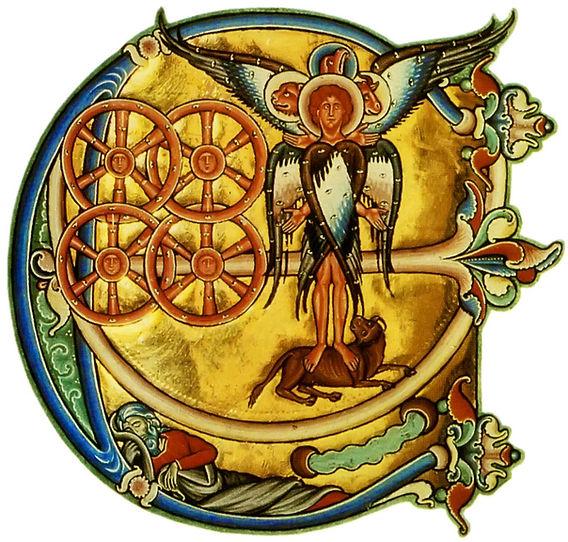
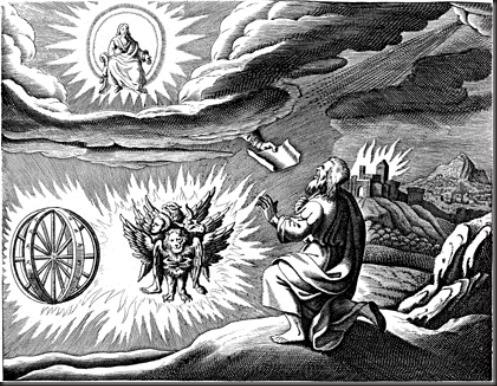
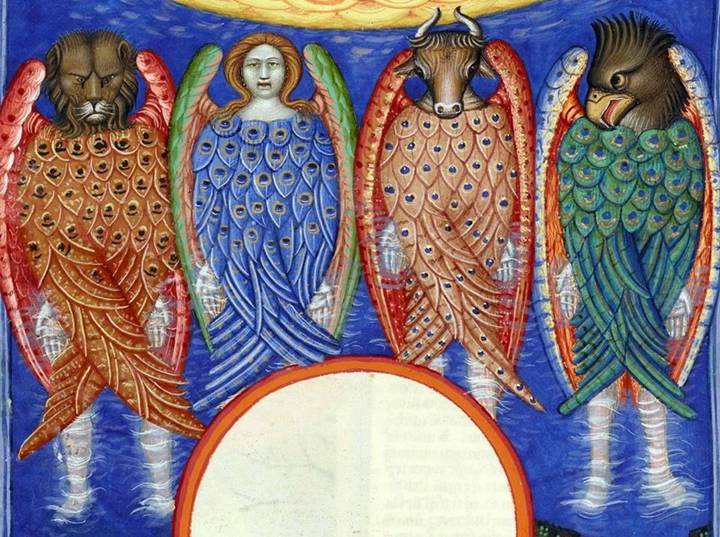
“Now as I looked at the living creatures, behold, there was one wheel on the earth beside the living creatures, for each of the four of them. The appearance of the wheels and their workmanship was like sparkling beryl, and all four of them had the same form, their appearance and workmanship being as if one wheel were within another.”
That sounds extremely strange to modern ears.
But we have to notice something crucial:
Ezekiel tells us what he is seeing.
It is a vision.
And ultimately he sees the glory of Yahweh.
The passage isn’t teaching Ezekiel about spacecraft.
It is revealing God’s glory and heavenly throne.
5. What about Elijah’s “chariot of fire”?
This is another passage people frequently connect with UFOs.
2 Kings 2:11 — NASB
“As they were going along and talking, behold, there appeared a chariot of fire and horses of fire which separated the two of them. And Elijah went up by a whirlwind to heaven.”
Notice the language:
fire chariot horses heaven whirlwind
That’s unquestionably supernatural.
But again, Scripture interprets the event for us.
It wasn’t an extraterrestrial visitation.
It was God’s supernatural transportation of Elijah.
6. What about “the heavens”?
Here’s where things become even more interesting.
The Bible uses “heavens” in several different ways.
There is the atmospheric heavens.
There are the celestial heavens—the sun, moon and stars.
And Scripture speaks of a spiritual heavenly realm.
Paul says:
2 Corinthians 12:2 — NASB
“I know a man in Christ, who fourteen years ago—whether in the body I do not know, or out of the body I do not know, God knows—such a man was caught up to the third heaven.”
Paul therefore uses the expression “third heaven.”
This demonstrates that biblical cosmology recognizes dimensions of reality beyond ordinary human experience.
But again, that doesn’t mean “third heaven = outer space” or “third heaven = another planet.”
7. Now bring Chris Bledsoe into the picture
This is where I think Bledsoe’s story becomes particularly interesting.
He initially interpreted his experiences through a UFO/alien framework.
But eventually he began interpreting the phenomenon as angelic/spiritual.
That’s actually much closer to the biblical question than simply asking:
“Which planet did they come from?”
But Christianity has another question:
Who is Jesus Christ in relation to all of this?
Because Scripture says:
Colossians 1:16–17 — NASB
“For by Him all things were created, both in the heavens and on earth, visible and invisible… All things have been created through Him and for Him. He is before all things, and in Him all things hold together.”
That puts everything—visible and invisible—under the authority of Christ.
8. And this is where discernment becomes essential
Suppose someone sees a luminous being.
Suppose it speaks.
Suppose it performs supernatural things.
Suppose it says:
“I am here to help humanity.”
The Bible says:
Don’t automatically believe it.
1 John 4:1 — NASB
“Beloved, do not believe every spirit, but test the spirits to see whether they are from God…”
And Paul’s warning is even stronger:
2 Corinthians 11:14 — NASB
“No wonder, for even Satan disguises himself as an angel of light.”
So even an apparently beautiful heavenly messenger must be tested.
9.The ultimate test is Jesus
This is where I would place the dividing line.
The Holy Spirit glorifies Jesus.
John 16:14 — NASB
“He will glorify Me, for He will take from Mine and will disclose it to you.”
Therefore, if a supposed supernatural revelation:
diminishes Jesus,
denies His incarnation,
denies His death and resurrection,
replaces Scripture,
introduces another gospel,
encourages worship of another being,
then Christians have biblical grounds to reject it.
Paul gives us the strongest possible warning:
Galatians 1:8 — NASB
“But even if we, or an angel from heaven, should preach to you a gospel contrary to what we have preached to you, he is to be accursed!”
Notice:
“even if… an angel from heaven.”
The supernatural appearance doesn’t authenticate the message.
The Gospel authenticates the message.
10. So, are UFOs demons?
I would not say that Scripture gives us enough information to make that declaration.
Could some supernatural phenomena theoretically involve spiritual beings?
Yes—the Bible clearly teaches that spiritual beings exist.
Could every UFO be explained that way?
No.
Could some UFO reports simply involve aircraft, satellites, atmospheric phenomena, optical effects, misidentification, or unexplained physical phenomena?
Absolutely.
Could there be something genuinely unexplained in some cases?
Certainly.
But “unexplained” doesn’t automatically mean “demonic,” “angelic,” or “extraterrestrial.”
“All things have been created through Him and for Him.”
And that gives us the proper perspective.
We don’t have to be afraid of UFOs, and we don’t need to become fascinated with them.
We need to be fascinated with Jesus.
“Test the spirits.” — 1 John 4:1
And the final question isn’t:
“Are they aliens?”
1. “Firmament” —רָקִיעַ(raqia)
The word raqia comes from the Hebrew root raqa, carrying the idea of something spread out, extended, or stretched out.
Genesis says:
Genesis 1:6–8 — NASB
“Then God said, ‘Let there be an expanse in the midst of the waters, and let it separate the waters from the waters.’ God made the expanse, and separated the waters which were below the expanse from the waters which were above the expanse. God called the expanse heaven.”
The NASB translates raqia as “expanse.”
Older English translations often use “firmament.”
What does this tell us?
It tells us that the biblical writers understood the created heavens as an expanse stretched out by God. It does not, by itself, teach that there is a solid dome preventing spacecraft from leaving earth.
Isaiah uses similar imagery:
Isaiah 40:22 — NASB
“It is He who sits above the circle of the earth, And its inhabitants are like grasshoppers, Who stretches out the heavens like a curtain And spreads them out like a tent to dwell in.”
The emphasis is God’s creative sovereignty, not a technical description of astrophysics.
2. “The heavens”
The Hebrew word isשָׁמַיִם(shamayim).
It is plural in form and is generally translated “heavens” or “sky.”
Genesis 1:1 says:
“In the beginning God created the heavens and the earth.”
The word can encompass the sky, celestial heavens, and the broader realm above the earth, depending upon context.
But Scripture also distinguishes the physical heavens from the spiritual heavenly realm.
Paul says:
2 Corinthians 12:2 — NASB
“I know a man in Christ, who fourteen years ago—whether in the body I do not know, or out of the body I do not know, God knows—such a man was caught up to the third heaven.”
This is where we have to be careful.
The Bible speaks about heavenly realms, but it does not give us a modern scientific map of dimensions.
3. “Sons of God” —בְּנֵי־הָאֱלֹהִים(bene ha’elohim)
Now we’re getting into one of the most fascinating passages.
Genesis 6:2 — NASB
“that the sons of God saw the daughters of men were beautiful; and they took wives for themselves, whomever they chose.”
The Hebrew expression literally means approximately:
“sons of God.”
And it appears elsewhere in Scripture.
For example:
Job 1:6 — NASB
“Now there was a day when the sons of God came to present themselves before Yahweh…”
Here the context clearly places the sons of God in the heavenly court.
Job 38:7 likewise speaks of:
“the sons of God”
shouting for joy when God created the earth.
That strongly supports an angelic/heavenly interpretation in Job.
However, Genesis 6 is debated. Faithful biblical scholars have understood the passage differently.
The three major interpretations are:
Angelic beings who rebelled.
The godly human line of Seth intermarrying with the ungodly.
Powerful human rulers who took women according to their own desires.
The first interpretation has a very long history and fits particularly well with Jude 6 and 2 Peter 2:4.
But we should not turn that interpretation into:
“Genesis says extraterrestrials bred with humans.”
It doesn’t say that.
4. Now the big one — Elohim
אֱלֹהִים— Elohim
This word is extremely important.
It’s often translated:
God
But grammatically, Elohim has a plural form.
That sometimes leads people to claim:
“The Hebrew Bible says there were multiple gods.”
That’s too simplistic.
When Elohim refers to the God of Israel, it normally takes singular grammatical verbs and adjectives.
For example:
Genesis 1:1
“In the beginning God (Elohim) created…”
The verb created is singular.
So Genesis isn’t teaching polytheism.
But elohim can refer to heavenly beings
This is where the Hebrew becomes fascinating.
The word elohim can function as a broader term referring to deity or beings belonging to the supernatural/heavenly realm, depending upon context.
Psalm 82 is an important example.
Psalm 82:1 — NASB
“God takes His stand in His own congregation; He judges in the midst of the rulers.”
The Hebrew contains Elohim in the opening:
Elohim stands in the assembly of El.
Then verse 6 says:
Psalm 82:6 — NASB
“I said, ‘You are gods, And all of you are sons of the Most High.’”
Jesus actually quotes this passage in John 10:34.
5. Does Elohim mean aliens?
No.
This is where some modern UFO interpretations go off the rails.
Some argue:
Elohim= extraterrestrial beings.
But there is no linguistic basis for equating the Hebrew word Elohim with extraterrestrials.
The biblical category is fundamentally the divine/heavenly realm, not beings from another planet.
6. But here’s where it connects to our UFO discussion
The Bible gives us something modern culture often doesn’t:
A category for supernatural intelligence that isn’t human.
Paul says:
Colossians 1:16 — NASB
“For by Him all things were created, both in the heavens and on earth, visible and invisible…”
Notice the two categories:
VISIBLE
and
INVISIBLE
And both were created through Christ.
That means biblical Christianity doesn’t require us to say:
“If something intelligent exists that isn’t human, it must be an extraterrestrial.”
The Bible already has a much larger supernatural framework.
7. And this brings us back to Chris Bledsoe and Steven Greer
This is where I would make a very important distinction.
Chris Bledsoe has interpreted his experiences increasingly in terms of angels/spiritual beings.
Steven Greer, on the other hand, has developed a worldview centered heavily around extraterrestrial intelligence, consciousness, meditation, and a universal spiritual reality.
Those are not the same theological framework.
And neither man’s personal interpretation establishes what the phenomenon actually is.
Scripture gives us the test:
1 John 4:1 — NASB
“Beloved, do not believe every spirit, but test the spirits to see whether they are from God…”
And then Scripture gives us the ultimate center of discernment:
Jesus Christ.
Colossians 1:16–17 — NASB
“All things have been created through Him and for Him. He is before all things, and in Him all things hold together.”
So whether we’re talking about angels, demons, visions, UFOs, unexplained phenomena, or alleged extraterrestrial beings, our foundation remains the same:
Christ is Lord over the visible and invisible creation.
In that day you will ask nothing of me. Truly, truly, I say to you, whatever you ask of the Father in my name, he will give it to you. 24 Until now you have asked nothing in my name. Ask, and you will receive, that your joy may be full. John 16:23-24
25 “I have spoken to you using figurative language, but the time is coming when I will no longer teach you with veiled speech, but I will teach you about the Father with your eyes unveiled. 26 And I will not need to ask the Father on your behalf, for you’ll ask him directly because of your new relationship with me. 27 For the Father tenderly loves you, because you love me and believe that I’ve come from God. 28 I came to you sent from the Father’s presence, and I entered into the created world, and now I will leave this world and return to the Father’s side.” 29 His disciples said, “At last you’re speaking to us clearly and not using veiled speech and metaphors! 30 Now we understand that you know everything there is to know, and we don’t need to question you further. And everything you’ve taught us convinces us that you have come directly from God!” 31 Jesus replied, “Now you finally believe in me. 32 And the time has come when you will all be scattered, and each one of you will go your own way, leaving me alone! Yet I am never alone, for the Father is always with me. 33 And everything I’ve taught you is so that the peace which is in me will be in you and will give you great confidence as you rest in me. For in this unbelieving world you will experience trouble and sorrows, but you must be courageous, for I have conquered the world!” Jesus Finished the Father’s Work John 16:25 – 17:1
For as he thinks within himself, so he is.” — Proverbs 23:7 (NASB)
The full thought is:
“For as he thinks within himself, so he is. He says to you, ‘Eat and drink!’ But his heart is not with you.” — Proverbs 23:7, NASB
The biblical principle
The Hebrew word translated “thinks” is שָׁעַר (sha’ar), carrying the idea of to calculate, reckon, estimate, or consider. The emphasis is not merely on a passing thought but on what a person reckons within his heart.
This connects with Jesus’ teaching:
“For from within, out of the heart of men, proceed the evil thoughts…” — Mark 7:21
And Paul tells us to deliberately govern our thought life:
“Take every thought captive to the obedience of Christ.” — 2 Corinthians 10:5
So biblically, what continually occupies and governs the heart eventually influences the way a person lives.
A powerful teaching theme would be:
THINKING → BELIEVING → SPEAKING → ACTING → LIVING
And Romans 12:2 gives the transforming answer:
“Be transformed by the renewing of your mind.”
If you want, I can develop “As a Man Thinks in His Heart, So Is He” into a deep, teachable Bible study with Old Testament + New Testament Scriptures, Hebrew/Greek word studies, and practical application.
Yes
Absolutely. Here is a deep, teachable Bible study you can use as a sermon or teaching.
AS A MAN THINKS IN HIS HEART, SO IS HE
The Biblical Power of the Thought Life
Key Text — Proverbs 23:7 (NASB)
“For as he thinks within himself, so he is.”
1. THE HEART IS THE INNER PERSON
In Scripture, the heart is much more than emotion. It is the center of a person’s inner life—thoughts, intentions, beliefs, desires, and decisions.
Proverbs 4:23
“Watch over your heart with all diligence, For from it flow the springs of life.”
What is established in the heart eventually finds expression in the life.
Jesus said:
Luke 6:45
“For his mouth speaks from that which fills his heart.”
Notice the progression:
Heart → Thoughts → Words → Actions → Life
What is consistently cultivated inwardly eventually becomes visible outwardly.
2. “AS HE THINKS” — THE POWER OF INNER REASONING
Proverbs 23:7 uses the Hebrew concept of calculating or reckoning within oneself.
The point is not simply:
“Whatever thought crosses your mind becomes reality.”
That would not be biblical.
Rather, Scripture is dealing with the thoughts and beliefs a person continually accepts, entertains, and establishes within himself.
A thought becomes especially powerful when it becomes a belief.
Consider the progression:
A thought is introduced. ↓ The thought is entertained. ↓ The thought becomes established. ↓ The heart begins to believe it. ↓ The mouth speaks it. ↓ The life begins to follow it.
That is why Scripture places such emphasis on renewing the mind.
3. THE MIND MUST BE RENEWED
Romans 12:2
“And do not be conformed to this world, but be transformed by the renewing of your mind…”
The Greek word for “renewing” is ἀνακαίνωσις (anakainōsis).
It carries the idea of renewal, renovation, or making new.
God does not merely want to change our circumstances.
He wants to change the way we think about our circumstances.
The world says:
“What you have determines who you are.”
God says:
Who you are in Christ determines how you should understand what you have.
4. YOUR THOUGHTS MUST COME UNDER THE AUTHORITY OF CHRIST
Paul gives us a very strong command:
2 Corinthians 10:5
“We are destroying speculations and every lofty thing raised up against the knowledge of God, and we are taking every thought captive to the obedience of Christ.”
Notice that Paul does not say:
“Believe every thought.”
He says:
“Take every thought captive.”
This means that not every thought deserves to live in your mind.
You can have a thought without accepting the thought.
You can experience a thought without agreeing with the thought.
You can recognize a thought without allowing it to become your belief.
Ask of every thought:
Is it true?
Is it consistent with God’s Word?
Does it agree with what God has revealed about me in Christ?
Does it produce faith or unbelief?
Does it lead me toward obedience or away from God?
5. WHAT YOU BELIEVE IN YOUR HEART AFFECTS WHAT YOU SPEAK
Jesus made this connection very clearly.
Matthew 12:34
“For the mouth speaks out of that which fills the heart.”
Your words eventually reveal what has been filling your heart.
This is why Scripture places such importance on confession.
Romans 10:9–10
“If you confess with your mouth Jesus as Lord, and believe in your heart that God raised Him from the dead, you will be saved; for with the heart a person believes, resulting in righteousness, and with the mouth he confesses, resulting in salvation.”
Notice the biblical relationship:
Heart believes → Mouth confesses → Life responds
Faith is not merely positive thinking.
Faith is believing what God has said and bringing your thoughts, words, and actions into agreement with Him.
6. THE WORD OF GOD IS THE STANDARD FOR OUR THINKING
We do not renew our minds by simply thinking more positively.
We renew our minds by putting God’s truth into them.
Joshua 1:8
“This book of the law shall not depart from your mouth, but you shall meditate on it day and night…”
The Hebrew concept of meditation involves muttering, speaking, pondering, and rehearsing God’s Word.
God’s Word moves:
Into the mind → into the heart → into the mouth → into conduct.
Psalm 1 gives the same principle.
Psalm 1:2–3
“But his delight is in the law of the LORD, And on His law he meditates day and night. He will be like a tree firmly planted by streams of water…”
What you repeatedly meditate upon roots you.
7. WHAT YOU FOCUS ON BECOMES IMPORTANT TO YOU
Consider Philippians 4:8.
“Whatever is true, whatever is honorable, whatever is right, whatever is pure, whatever is lovely, whatever is of good repute… dwell on these things.”
The Greek word λογίζομαι (logizomai), used in this passage, means to reckon, consider, count, or deliberate upon.
Paul is teaching us to become intentional about what we allow our minds to dwell upon.
Don’t merely ask:
“What am I thinking?”
Ask:
“What am I allowing myself to think about?”
There is a difference.
8. FEAR ALSO BEGINS WITH WHAT WE ACCEPT INTERNALLY
Job said:
Job 3:25
“For what I fear comes upon me, And what I dread befalls me.”
Job’s statement illustrates how deeply fear can affect a person’s inner life.
Fear continually rehearses:
“What if this happens?”
Faith asks:
“What has God said?”
Fear magnifies the problem.
Faith magnifies God.
Fear says:
“I don’t know what will happen.”
Faith says:
“I know who holds tomorrow.”
9. WE MUST DISTINGUISH BETWEEN A THOUGHT AND THE TRUTH
This is extremely important.
A thought may say:
“I’m defeated.”
God’s Word says:
“But in all these things we overwhelmingly conquer through Him who loved us.” — Romans 8:37
A thought says:
“I can’t do this.”
God’s Word says:
“I can do all things through Him who strengthens me.” — Philippians 4:13
A thought says:
“God has abandoned me.”
God’s Word says:
“I will never desert you, nor will I ever abandon you.” — Hebrews 13:5
The answer to a wrong thought isn’t merely:
“Think something positive.”
The answer is:
“Replace the thought with God’s truth.”
10. JESUS SHOWED US HOW TO DO THIS
When Satan tempted Jesus in Matthew 4, Jesus repeatedly answered:
“It is written…”
Jesus did not argue from His feelings.
He answered temptation with the Word of God.
This gives us a pattern:
Temptation → God’s Word → Faith → Obedience
The enemy’s strategy is often to introduce a thought contrary to God’s Word.
Our response is not to negotiate with the thought.
We bring it under the authority of Scripture.
11. THE BATTLE IS OFTEN IN THE MIND
Ephesians 6:16 speaks of:
“the shield of faith”
because faith extinguishes the “flaming arrows of the evil one.”
Thoughts can be like arrows.
But an arrow entering the battlefield doesn’t mean it has to remain there.
You don’t have to build a house around every thought that enters your mind.
Take it captive.
12. CHANGE THE WAY YOU SEE YOURSELF
One of the most important applications is your identity.
If you continually think:
“I am worthless.”
You will behave as though you are worthless.
But Scripture says:
Ephesians 2:10
“For we are His workmanship, created in Christ Jesus for good works…”
You aren’t defining yourself.
God has already spoken concerning you.
2 Corinthians 5:17
“Therefore if anyone is in Christ, he is a new creature…”
So the question becomes:
“Am I going to define myself by my past, my feelings, my failures—or by what God has said?”
13. THINK ON WHO GOD SAYS YOU ARE
According to Scripture, in Christ you are:
Forgiven — Colossians 1:14 Accepted — Ephesians 1:6 A new creation — 2 Corinthians 5:17 God’s workmanship — Ephesians 2:10 A child of God — John 1:12 Complete in Christ — Colossians 2:10 Seated with Christ — Ephesians 2:6 More than a conqueror — Romans 8:37 Part of a chosen people — 1 Peter 2:9 Called to walk in God’s good works — Ephesians 2:10
When you know who God says you are, you can begin to live from that identity rather than continually trying to obtain one.
14. THE BIBLICAL CYCLE
Here is the central teaching:
WHAT YOU THINK
↓ influences
WHAT YOU BELIEVE
↓ influences
WHAT YOU SAY
↓ influences
WHAT YOU DO
↓ influences
HOW YOU LIVE
But we can interrupt the cycle.
BRING THE THOUGHT TO GOD
↓ COMPARE IT WITH SCRIPTURE ↓ REJECT WHAT CONTRADICTS GOD ↓ BELIEVE WHAT GOD HAS SAID ↓ SPEAK ACCORDING TO HIS WORD ↓ ACT IN FAITH
15. THE GREAT QUESTION
The issue isn’t:
“Can I control every thought that comes into my mind?”
The better question is:
“What thoughts am I permitting to become established in my heart?”
You cannot necessarily prevent every bird from flying over your head.
But you don’t have to let it build a nest there.
16. A DAILY SCRIPTURAL PRACTICE
Every morning, deliberately establish your mind upon God’s Word.
1. READ
Psalm 119:105
“Your word is a lamp to my feet And a light to my path.”
2. MEDITATE
Think deeply about what God has said.
3. BELIEVE
Allow God’s Word to become established in your heart.
4. SPEAK
Declare agreement with God’s Word.
5. ACT
Put the Word into practice.
6. REPEAT
Transformation comes through continual renewal.
THE CENTRAL TRUTH
Proverbs 23:7 says:
“For as he thinks within himself, so he is.”
But the complete biblical principle is even stronger:
What fills the heart influences the thoughts. What governs the thoughts influences the words. What governs the words influences the actions. And our actions shape the course of our lives.
Therefore:
GUARD YOUR HEART.
RENEW YOUR MIND.
TAKE YOUR THOUGHTS CAPTIVE.
FILL YOUR HEART WITH THE WORD.
BELIEVE WHAT GOD HAS SAID.
SPEAK WHAT AGREES WITH GOD.
WALK IT OUT BY FAITH.
Proverbs 4:23
“Watch over your heart with all diligence, For from it flow the springs of life.”
Your life will continually move in the direction of what you have established in your heart.
And that is why God says:
“Be transformed by the renewing of your mind.” — Romans 12:2
Those who seek to get rich add sorrow
Yes. You are thinking of Proverbs 28:20 and especially Proverbs 23:4–5.
Proverbs 28:20 — NASB
“A faithful man will abound with blessings, But he who makes haste to be rich will not go unpunished.”
And the passage that specifically connects the pursuit of riches with sorrow is:
Proverbs 23:4–5 — NASB
“Do not weary yourself to gain wealth, Cease from your consideration of it. When you set your eyes on it, it is gone. For wealth certainly makes itself wings Like an eagle that flies toward the heavens.”
There is also a very direct New Testament parallel:
1 Timothy 6:9–10 — NASB
“But those who want to get rich fall into temptation and a snare and many foolish and harmful desires which plunge people into ruin and destruction. For the love of money is a root of all sorts of evil, and some by longing for it have wandered away from the faith and pierced themselves with many griefs.”
The key distinction
The Bible does not teach that money or prosperity is evil.
It warns against the desire to become rich becoming the controlling pursuit of the heart.
Paul says:
“Those who want to get rich…”
The issue is the love, longing, and pursuit of riches above God.
Compare that with:
“But seek first His kingdom and His righteousness, and all these things will be added to you.” — Matthew 6:33
So the biblical order is:
Seek God → Trust God → Work faithfully → Give generously → Receive His provision
rather than:
Pursue riches → Make money the goal → Compromise → Experience grief
This fits beautifully with your previous theme:
“For as he thinks within himself, so he is.” — Proverbs 23:7
What controls the heart eventually controls the direction of the life.